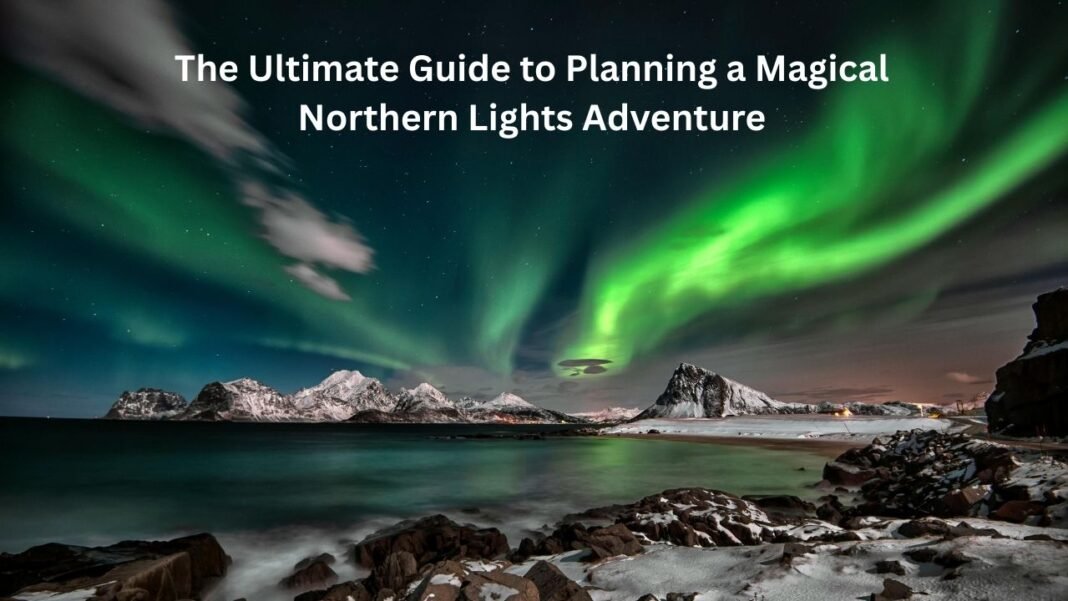

There are journeys you enjoy, journeys you recall, and then there are journeys that open your eyes to seeing the world in a different way. Chasing the Northern Lights is definitely the latter. If you’ve ever had a dream of witnessing the sky dance with green, purple, and pink streaks of light, then you’re not alone. The Aurora Borealis has a way of stirring something childlike within us – curiosity, wonder, and that small voice in the back of our minds that tells us the universe is bigger than we like to imagine most of the time.
Here’s the thing that most travel magazines won’t show you in their glossy pictures: chasing the Northern Lights isn’t just about flying to the right place and hoping for the best. It’s science, timing, preparation, and yes, a little bit of luck. The good news is that with the right plan and a little bit of assistance from technology, your odds of witnessing this spectacular sight go way up.
Let’s go through it step by step – as if we’re planning your trip together.
Understanding What You’re Actually Chasing
Before you even pick a location, it is helpful to have a basic understanding of what the Northern Lights actually are. The Northern Lights are created when solar particles interact with gases in the Earth’s atmosphere. In other words, solar activity is important. The more intense the solar activity, the more colorful the Northern Lights.
Now, you don’t have to guess. There are applications available that allow you to track solar activity days in advance. People who used to travel based on local legends now track satellite information. It is a great example of how technology changes travel education. You’re not just traveling to a place; you’re learning about the science behind it.
Choosing the Right Destination
Not all Northern Lights tourist spots are the same. The most favorable locations are within the region known as the auroral oval. These locations include northern Norway, Iceland, Finnish Lapland, northern Canada, and Alaska.
If you want the best possible chances of viewing the Northern Lights, keep the following in mind:
- A clear sky with little light pollution
- A location above 65° north latitude
Rural areas will often offer better viewing opportunities than major cities. This is because a location with little artificial lighting will offer better viewing conditions than a location with many streetlights and people.
Here’s a tip for the traveler: Sometimes the best location isn’t the most popular location – it’s the location with the best forecast during your time of travel.
Timing Is Everything
The best time to witness the Northern Lights is from late September to early April. Winter is the best time because the nights are darker and longer. However, it may be difficult if you are not equipped to handle the extreme cold.
Most people think that December is the best time to see the Northern Lights since it is the darkest month. However, the best time is usually February and March because the nights are long, and the weather is not as cold as in December or January.
Technology can also be of great help in this regard. There are archives of data on the Northern Lights that enable you to compare the months and places before you travel. You can actually plan your trip based on the data that has been collected over the years. That is not just smart travel; that is data-driven adventure.
Packing Like a Pro (Without Overpacking)
If you’ve never been in Arctic conditions, let me be frank with you: it’s a wild experience. Standing outside for hours in −20°C waiting for the lights to come on is no joke.
Here are three things to focus on:
- Base layers
- Insulated jackets
- Battery backups (batteries die quickly in the cold)
The final one always surprises people. Phones, cameras, and even batteries die quickly in the cold. Some people bring batteries in their inner pockets to keep them warm. It’s a small tip that can make or break your chances of taking pictures of the lights when they finally come on.
Capturing the Moment Without Missing It
One of the most common pitfalls that beginner aurora hunters fall into is spending the entire experience behind the screen of a camera. Of course, you want to take pictures, but you also want to create memories that aren’t filtered through a lens.
The fact is, today’s smartphones and cameras have made photography easier than ever. Night modes, AI stabilization, and exposure adjustments mean that you don’t have to be a professional photographer to take amazing pictures. Some apps will even walk you through the best settings based on the light conditions at the time.
Once you get back from your adventure, there are tools like the Adobe Express Collage Maker that can help you take your photos and turn them into a visual story that brings your experience back to life. It’s incredible to think that technology not only helps you plan and take the experience, but also helps you relive it.
Learning From Locals (and Why It Matters)
You can read all the blog entries and watch all the documentaries, but there’s no substitute for local knowledge. Guides who live in areas where the Northern Lights are visible understand the subtle cues that tourists might not notice: changes in cloud patterns, wind direction, or the way that certain valleys can hold a clear sky while other areas are cloudy.
Today, many guides are able to combine traditional knowledge with modern forecasting technology. They follow the satellite images and solar patterns throughout the day, changing course on the fly to give you the best chance possible. It’s a remarkable combination of traditional knowledge and modern technology – a testament to the way that learning adapts when different cultures come together.
Managing Expectations (This Part Is Important)
Let’s face it: the Northern Lights are unpredictable. Even with the most meticulous planning, nature always gets the last word. Some people get to see the Northern Lights on their first night. Others take a week.
The trick is to have the right attitude. The Northern Lights should be the icing on the cake, not the cake itself. There are plenty of other activities to enjoy in the Arctic regions: dog sledding, snowshoeing, ice fishing, reindeer encounters, and scenery that looks like it’s from another planet. When you focus on the entire experience, you’ll enjoy every bit of it no matter what happens in the sky.
The irony is that people who learn to enjoy the journey will likely see the Northern Lights anyway.
Budgeting Without Stress
Northern Lights holidays can be quite flexible when it comes to budget. Yes, there are luxury glass igloos available, but there are also budget hostels, cabin stays, and discounted flights during the off-season.
If you are looking to cut costs:
- Travel on a weekday instead of on the weekends.
- Stay in a place that is not a tourist destination.
- Use apps to track the prices of flights.
Technology is your friend once again. There are tools available that predict prices and notify you when the prices go down.
The Emotional Side No One Talks About
But then something unexpected happens when you finally witness the aurora. People become quiet. Strangers stop talking. Cameras go down. For a few minutes, people just watch.
It’s difficult to describe unless you have witnessed it yourself. The lights do not simply appear; they move, dance, and change shape like living brushstrokes across the sky. And in that moment, all the planning, the cold, the waiting, and the research suddenly make sense.
Travel has a way of teaching lessons that no classroom can. The Northern Lights, in particular, are a reminder of how small your problems are in comparison to the size of the universe. It’s not just a view. It’s perspective.
Final Takeaways for Your Adventure
Planning a trip to see the Northern Lights is not about getting lucky; it’s about giving yourself the best possible chance. Pick the right spot, go at the right time of year, check the forecasts, and be prepared for the cold. Let technology be your guide, but be present enough to enjoy the experience without distraction.
Most of all, remember this: The best travel stories are not about flawless planning. They are about curiosity, adaptability, and the pursuit of wonder, even if it means standing in the snow at midnight with your eyes fixed on the sky like a child seeing stars for the first time.
And when the Northern Lights finally show up, you won’t just see them. You’ll feel them.