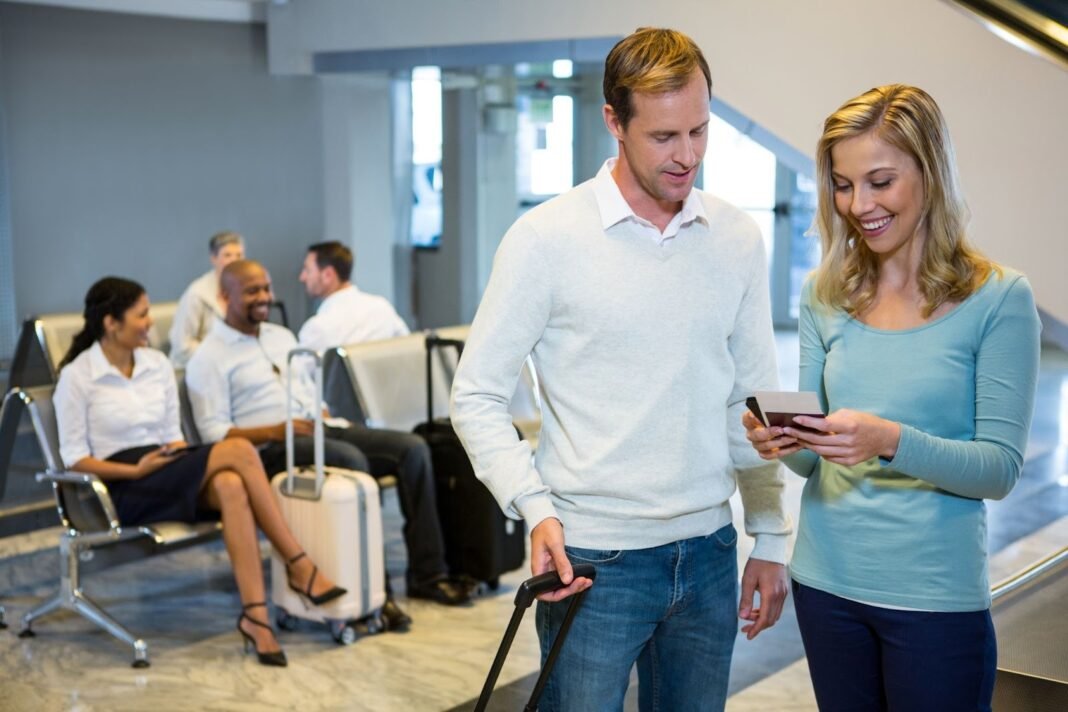

Ask someone who traveled internationally a decade ago about the hardest part, and they’re not likely to mention turbulence. They’ll talk about long queues and the disorientation of navigating an unfamiliar airport where nothing feels intuitive and communication breaks down.
That feeling hasn’t disappeared completely, but it is changing. Slowly and in ways that don’t match how airlines describe progress in official updates. The real evolution of the passenger experience is less polished and more interesting than the standard industry narrative.
Biometric Process
Facial recognition at airports once sounded futuristic, but in practice it removes friction. Most passengers experience it as faster movement through checkpoints rather than a technological spectacle.
Programs such as Delta’s Digital ID at major U.S. airports and biometric integration in hubs like Frankfurt show how quickly the system is expanding. In Singapore, Changi Airport has normalized these processes to the point where they feel routine. Surveys indicate that most travelers prefer biometric verification over traditional document checks because it reduces unnecessary steps. What makes adoption notable is that it remains voluntary. Passengers choose it repeatedly for one simple reason: it saves time.
In-Flight Meals Are Being Taken Seriously
For years, airline food was a punchline. Soggy pasta. Bread rolls that survived nuclear testing. The safety-first approach to catering resulted in food being technically safe. The announcement by United Airlines that they are partnering with Chef’s Table for Polaris Business Class in 2026 is more than just a PR exercise. It reflects a broader shift: airlines are finally treating the food and drink offering as a real product decision rather than a logistical one. Augmented reality entertainment has already been tested, and personalized content recommendations based on past flight behavior are live on select carriers. Whether most economy passengers see these improvements anytime soon is a separate, fair question, but the right direction is clear.
AI Is Doing the Invisible Work
Most passengers have no idea how much artificial intelligence operates behind their flights. Gate assignments. Crew scheduling. Maintenance prediction. Baggage routing. Delay forecasting hours before an airline would traditionally alert you.
Heathrow is trialing AI-assisted air traffic control. Etihad integrated AI into safety management. Japan Airlines deployed machine learning for baggage handling. None of this makes headlines. The goal is a flight that runs without incident, which only gets noticed when it doesn’t happen.
Where AI shows up more visibly is in communication. Upgrade offers timed to individual browsing behavior. Flight updates pushed through whichever channel a passenger prefers. Tone adjusted based on loyalty tier. It’s subtle, but frequent flyers increasingly notice that interactions feel less scripted than they used to.
The Translation Problem Nobody Talks About Enough
Here’s something the aviation industry doesn’t highlight: a huge portion of international passengers navigate airports and flights in languages they’re not fully comfortable in. Safety instructions. Customs forms. Medication disclosures. Baggage policy. These aren’t casual interactions. Getting them wrong has consequences.
A specialized tourism translation company approaches this differently than a generic language tool. This is about understanding how a phrase carries authority in Mandarin versus how the same instruction reads in German, or why a polite request in English might come across as dismissive in Arabic. Airlines serving multi-region routes are slowly figuring out that this expertise is a product decision.
Multilingual ground staff. Translated digital boarding passes. Localized app interfaces. These things reduce anxiety at the passenger level in ways that seat upgrades never could.
China’s Travelers Deserve Better Than Machine Translation
Asia-Pacific posted 26% international traffic growth last year. Chinese travelers are a massive driver of that number, and they arrive with expectations that a lot of Western carriers have yet to fully address. Digital payment preferences. Different communication norms. A reasonable expectation that documents affecting their travel will be accurate.
That’s where professional Chinese document translation services matter in a way that’s hard to overstate. A visa condition misunderstood. A baggage restriction that doesn’t translate cleanly and results in a fee the passenger genuinely didn’t expect.
Airlines that localize properly for Chinese-speaking passengers culturally, report stronger satisfaction scores and measurable retention differences. Changi Airport’s reputation for excellence isn’t built on terminal architecture alone. A significant part of it comes from making every passenger feel the information around them was written for them, not translated for them.
Conclusion
The entire experience of international travel starts the moment a person opens an app and ends when they claim their bag. Everything in between, from the reminder to check in to the announcement that the gate has been changed to the language used on the customs form and the ease of understanding the arrival instructions, is all part of that journey.
When the app knows the seat, food, language, connection, and status without the passenger asking for it, the experience changes. Flying is no longer a system to be navigated; it becomes a system designed around you.