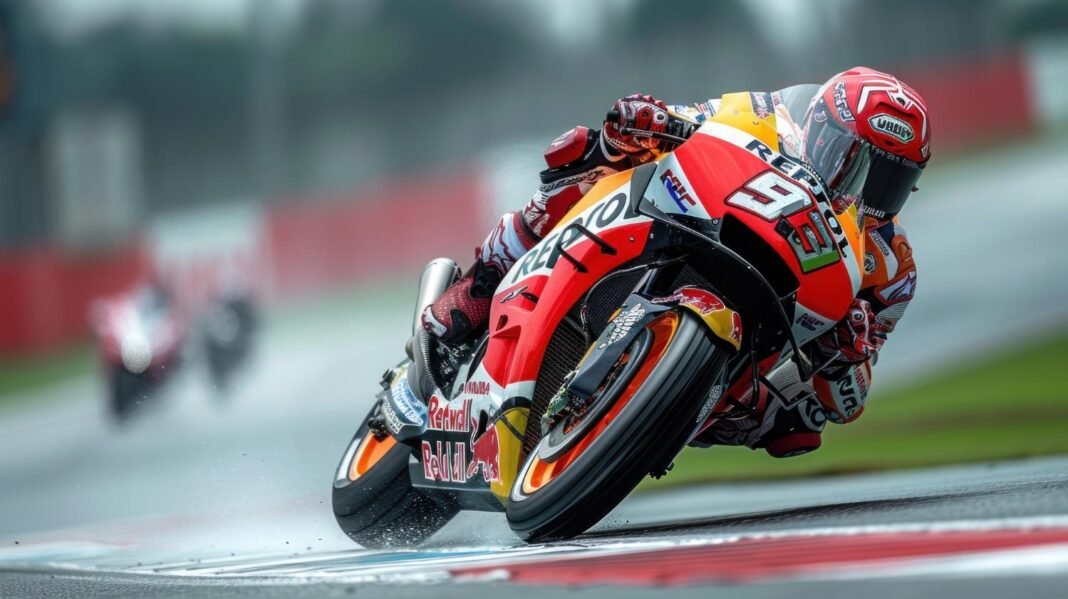

Remy Gardner lost a winglet during a crash at the Spanish Grand Prix and described his bike afterwards as “unrideable.” One carbon-fibre appendage gone, and a factory-spec KTM was wheelieing sideways, pulling to the right, basically undriveable for the rest of the race. That’s the kind of detail worth sitting with if you bet on MotoGP. Before you even go through your 1xbet singapore ahead of a race weekend, you need a basic feel for how much aerodynamic hardware dictates results now. Not engine power. Not tyres. Aero.
Why Winglets Matter More Than Horsepower
Think of a winglet as a tiny upside-down airplane wing bolted to the fairing. Over 270 horsepower pushing roughly 157 kg wants to flip the front wheel skyward on every straight. Winglets pin the nose down, let riders open the throttle earlier out of bends, and at 70-degree lean angles the outside winglet still presses the bike into the tarmac. Ducati figured this out first in 2015 with the GP15, and everyone else spent years playing catch-up.
Where it gets interesting for betting is the speed trap data. Published every Friday practice session. Free. Most people skip right past it. A bike consistently five or six km/h quicker through the speed trap at a power circuit tells you something. It’s running an aero package that works. And aero that works means later braking, better tyre temps, more confidence on corner entry.
Dirty Air and Why Pole Position Pays
Here’s the catch nobody talks about enough. All that downforce the leading bike generates? It throws a wall of turbulence behind it. Joan Mir complained after the French Grand Prix that riding behind factory Ducatis felt like losing air entirely, with enough turbulence to make stopping the bike a problem.
Front tyre overheating is the real killer. A following rider gets less cooling airflow to the front tyre, brakes harder to compensate, and the tyre temperature spikes. Grip vanishes. So what you end up with looks something like this.
| What happens | Rider in front | Rider behind |
| Front tyre cooling | Normal airflow | Choked, overheating fast |
| Downforce stability | Consistent | Drops in and out unpredictably |
| Braking confidence | High, repeatable | Sketchy, front wants to tuck |
| Passing opportunity | Doesn’t need one | Has to wait for a mistake |
Qualifying position has quietly become one of the most underpriced edges in MotoGP betting. Pole at Mugello or Jerez, circuits where overtaking opportunities are scarce anyway, is worth more than most odds reflect. Cross-referencing a rider’s qualifying pace with how few passes typically happen at a given circuit can flag bets the market hasn’t caught up to.
Reading Aero Into Your Manufacturer Picks
Ducati won 17 of 22 races in 2025. Forty-four podiums across sprints and GPs. An absurd 88-race streak with at least one Ducati rider on the rostrum, dating back to the 2021 Aragon Grand Prix. Gigi Dall’Igna arrived from Aprilia in 2014, and the Desmosedici’s aerodynamic development since then has been relentless.
Bettors who track motorcycle racing through platforms like 1xBet can build sharper pre-race reads by paying attention to aerodynamic signals. During registration on the 1xBet site, enter the promo code 1x_3831408 to get the opportunity to increase the maximum bonus on the first deposit. The bonus amount and wagering conditions depend on the country of registration, so before making the first deposit, make sure to familiarize yourself with the bonus crediting rules on the official site.
But Aprilia grabbed four of the five races Ducati dropped in 2025. Different circuits, different conditions, and the RS-GP delivered at all of them. Honda picked up the fifth win at a rain-soaked Le Mans. Rain is the great equalizer because it strips aerodynamic advantage almost completely. Rider feel and mechanical grip take over. Anyone betting live during a wet session who still treats Ducati as the automatic favourite is leaving money on the table.
Some practical signals worth watching before you place a race bet.
- Concession status changes mid-season. Honda and Yamaha got extra aero development windows and testing in recent years, and sometimes a new fairing homologation halfway through a season can jump a bike’s pace overnight
- Speed trap rankings over multiple circuits tell you more than one weekend. A bike that keeps showing up in the top five at power-sensitive tracks is running an aero package you can trust
- Wet-to-dry performance swings for individual riders. Big gaps between rain results and dry results point to a rider whose pace depends heavily on aerodynamic grip, and that’s useful information when clouds roll in on race day
What 2027 Regulation Changes Mean for Bets
Engines drop from 1000cc to 850cc. Front fairing width shrinks from 600mm to 550mm. Nose gets pushed back 50mm. Rear aero elements lose 100mm of height. Ride-height devices and holeshot systems are gone entirely. Pirelli takes over from Michelin on tyres.
Every manufacturer starts 2027 at concession Rank B, reassessed mid-season using only 2027 results. Ducati’s decade of aero development doesn’t disappear, but it gets squeezed by smaller bodywork dimensions. Dani Pedrosa said the ride-height device ban alone will make races less predictable, and he’s probably underselling it. Remove the automated launch systems, shrink the wings, change the tyre supplier, and suddenly pre-season testing at Sepang and Portimao matters more than any historical form guide.
Lap time gaps between manufacturers during those tests will be the earliest useful data point. A factory closing the gap to Ducati has likely figured out something with the 850cc package that others haven’t. Early-round championship odds on Honda and Yamaha will carry more value than they have since either manufacturer last won a dry race.